One sensor.
Three form factors.
The chip that measures binding kinetics on a lab bench is the chip designed into the clinical cartridge.
MX-104
Multiplex interaction analysis, available now.

MX-200
Multiplex label-free kinetics, on a bench. Coming Q1 2027.
TX-100
From bench to bedside, on the same chip.
Our lineup
Four products, one sensor. Each line starts with who it is for.
| Product | Who it is for | What it does | Status |
|---|---|---|---|
| MX-104 | Research labs buying this cycle | Multiplexed label-free binding kinetics. Three sample channels, free of bulk effects. | Shipping. Units available for immediate delivery. |
| MX-200 | Research labs and assay developers | Benchtop multiplex biosensor. Real-time kinetics and endpoint quantitation, no reference channel. | Successor to the MX-104. Coming Q1 2027. |
| IRIS Chips | Anyone running an MX instrument | The consumable. Functionalised dual-layer silicon, pre-spotted or spot your own. | Shipping. |
| TX-100 | Hospitals and clinical partners | Single-use cartridge designed to be read at the point of care. | In development. Not available for sale. |
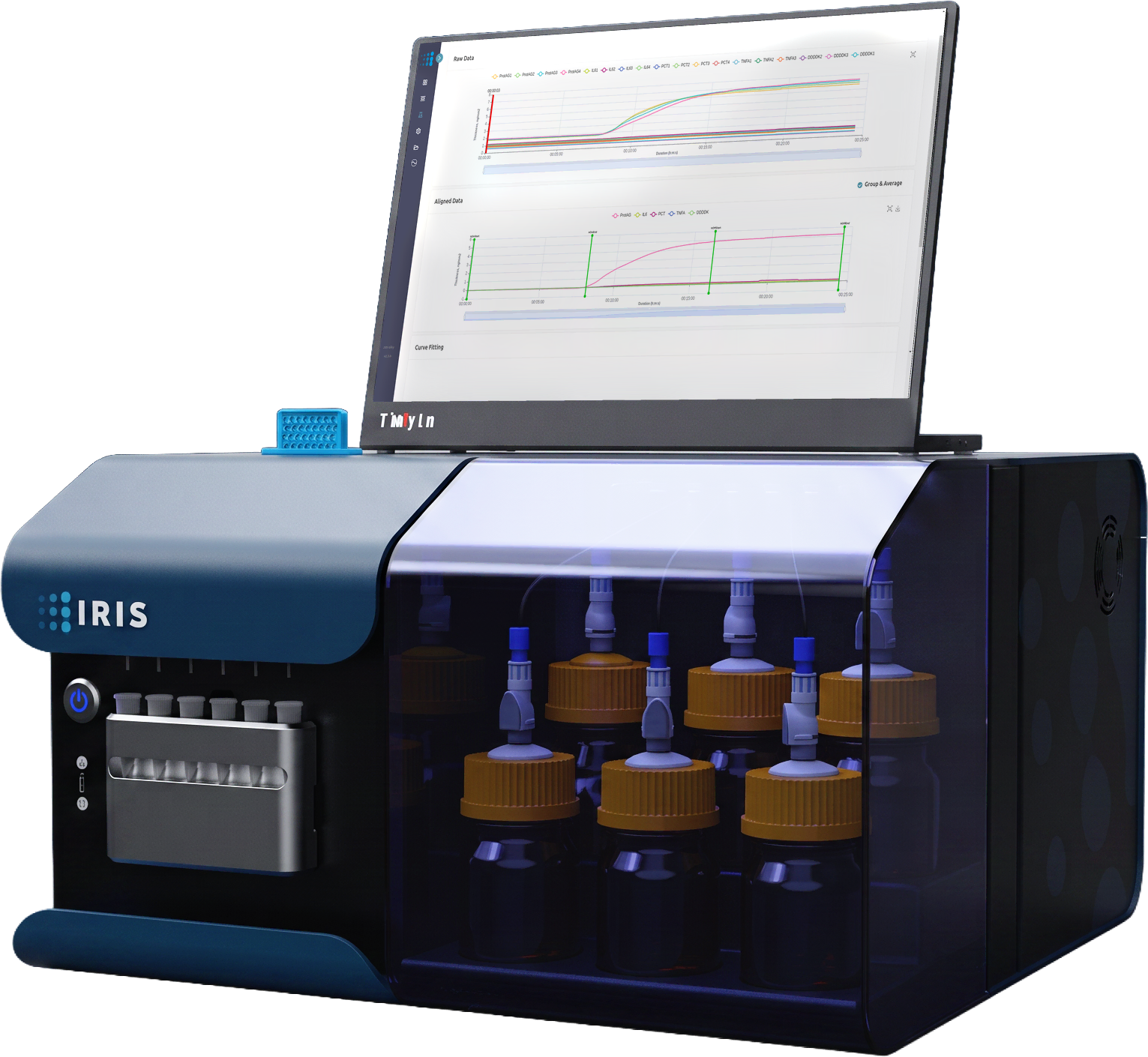
MX-104
Research Use OnlyMultiplex interaction analysis, available now.
For research labs buying this cycle.
Shipping. Sold through axiVEND. Units available for immediate delivery.
The MX-104 analyses biomolecular interactions in a multiplexed format. Unlike surface plasmon resonance, it is free of bulk effects such as those caused by DMSO, which makes accurate small-molecule binding kinetics possible. Multiple capture probes are immobilized on an IRIS chip, sample is flowed across, and every interaction produces its own kinetic binding curve in parallel.
minimum sample volume, up to 2.5 mL per load
sample auto load
off-rates (koff) measured directly, not extrapolated
Buy now, trade up later
The MX-104 is being succeeded by the MX-200 in Q1 2027. Units are available for immediate delivery, and there is a program that lets you take an MX-104 now on a monthly fee and start generating binding data straight away. When the MX-200 arrives, return the MX-104 and move to the new system at a discounted rate.
Ask about the transition programMX-104 specifications
| Specification | Value |
|---|---|
| Sample volume | 100 µL to 2.5 mL per load (syringe size). Larger volumes in multiple steps. |
| Chamber volume | 2 to 10 µL |
| Flow rate | 6.25 µL/min to 5 mL/min |
| Maximum experiment time | 400 min per cycle, no limit on the number of cycles |
| Fluidics | 3 channels, flexible configuration, 25 µL sample size |
| Dimensions | 20 × 12 × 9 in (l × w × h) |
| Weight | 30 lb |
| Power | 120 to 240 V, 70 W, via a 24 V adapter |
| Control | Ships with onboard computer, keyboard, and mouse. Plug and play. |
| Bulk effect | Minimal. Small-molecule binding measurable in DMSO and other solvents. |
| Consumable | IRIS Chip, single use |
| Distribution | axiVEND |
What the MX-104 is for
Antibody selection
Spot your target protein alongside off-target or related ones and screen candidate antibodies for selectivity and for their on- and off-rates. Or spot candidate antibodies and flow your target analyte, comparing every binding characteristic in parallel.
Therapeutic antibodies
Direct measurement of very slow off-rates, down to 10−6 s−1. Multiplexed antibody chips against proteins of interest.
Bioprocess monitoring
Bulk-effect-free operation allows sampling of cell supernatants for direct label-free measurement of biologics titre and composition.
For Research Use Only. Not for use in diagnostic procedures.
MX-200
Research Use OnlyMultiplex label-free kinetics, on a bench.
For research labs and assay developers.
Successor to the MX-104. Coming Q1 2027.
The MX-200 uses the Interferometric Reflectance Imaging Sensor to measure molecular binding in real time, directly from a multiplex chip. It belongs alongside your SPR and BLI workflows, adding wide multiplexing and imaging-based readout without a reference channel or bulk-effect correction, so you get more information out of every sample.
biomarkers measured in a single multiplexed run
on-rate, off-rate and affinity in real time, plus endpoint quantitation
shot-noise-limited averaging
Better data, because it fits the model
IRIS technology generates experimental data that better fits the binding of molecules. In practice that means fewer artifacts and fewer manual exclusions before you get to an affinity you can defend.
See the head-to-head comparisonMX-200 specifications
| Specification | Value |
|---|---|
| Multiplexing | Up to 100 biomarkers per run |
| Measurement | Real-time kinetics and endpoint. kon, koff, KD and quantitation. |
| Reference channel | None required. Shot-noise-limited averaging. |
| Bulk-effect correction | None required |
| Format | Benchtop, single instrument |
| Consumable | IRIS Chip, single use |
| Availability | Q1 2027 |
| Sample volume, chamber volume, flow rate, fluidics, dimensions, power | On request from axiVEND |
For Research Use Only. Not for use in diagnostic procedures.
IRIS Chips
Research Use OnlyThe consumable everything runs on.
For anyone running an MX instrument.
Shipping. Sold through axiVEND.
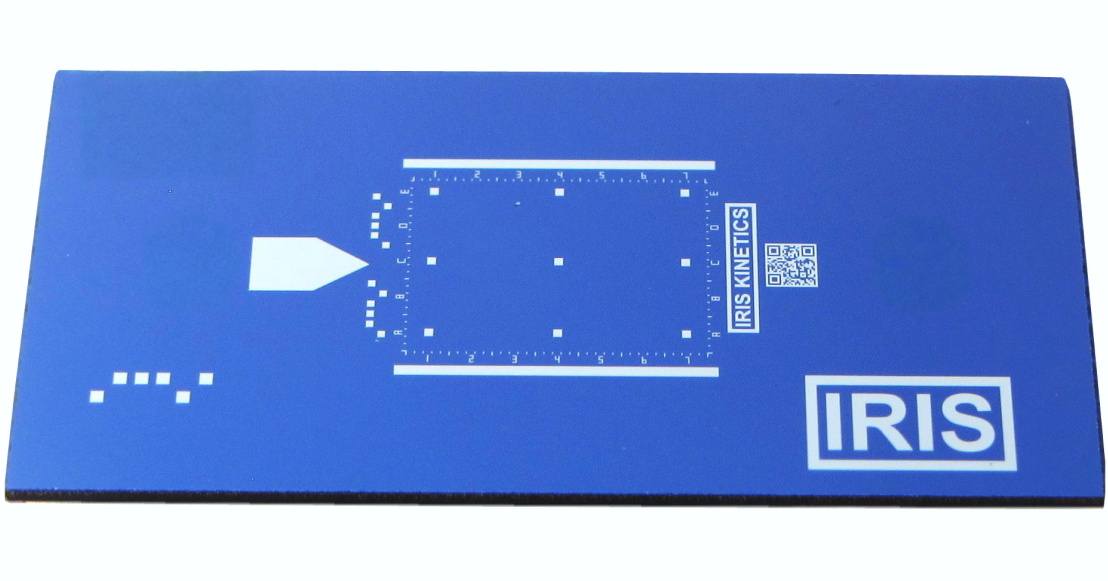
An 8 × 16 mm dual-layer silicon chip with a functionalised surface for immobilizing antibodies, nucleic acids, or other capture molecules, assembled into a flow cell using a gasket and cover glass. Simple enough that the experimental design stays yours.
Truly disposable. No reusing old sensor chips.
Pre-spotted, ready to run
Chips come pre-spotted with Protein A, G or A/G and pre-assembled into ready-to-use cartridges. Condition with buffer, flow a capture molecule through the cell, then flow your samples.
Spot your own
Spot a microarray of capture antibodies onto a surface-functionalised chip, assemble into a flow-cell cartridge, and flow antigen-containing samples through to get multiplexed parallel binding curves. Once assembled, the cartridge lowers into the top-loading slot of the instrument. The oxide coating is compatible with standard glass surface chemistries, so existing protocols usually transfer.
Spotting equipment
IRIS partners with axiVEND, a distributor of M2-Automation spotters. The iFOUR spotter has been customized with a deck built for IRIS chips and preloaded spotting programs, so a lab spotting its own arrays does not start from a blank machine.
One spotter supports ten or more IRIS systems, and a single spotting batch takes fifty or more chips.
IRIS Chip specifications
| Specification | Value |
|---|---|
| Chip dimensions | 8 × 16 mm |
| Substrate | Dual-layer silicon, functionalised surface |
| Sensor area | 5 × 7 mm |
| Standard array field of view | 2.5 × 3 mm |
| Spot diameter | approx. 150 to 250 µm |
| Dense-array capacity | 1,200 capture spots in a 7 × 5 mm field of view, about 400 targets in triplicate |
| Channel height | 25 µm |
| Chamber volume | 2 to 50 µL, cartridge range. The MX-104 instrument is specified at 2 to 10 µL. |
| Surface coating | Polymer or custom chemistry. Uncoated chips available for customer-defined chemistry. Oxide coating compatible with standard glass surface chemistries. |
| Pre-spotted options | Protein A, Protein G, Protein A/G, pre-assembled into ready-to-use cartridges |
| Assembly | Gasket and cover glass. Assembly kit provided with each chip. Assembly time about 5 min. |
| Shelf life, spotted | Stable for multiple weeks |
| Reuse | None. Single use by design. |
For Research Use Only. Not for use in diagnostic procedures.
TX-100
In DevelopmentFrom bench to bedside, on the same chip.
For hospitals and clinical partners.
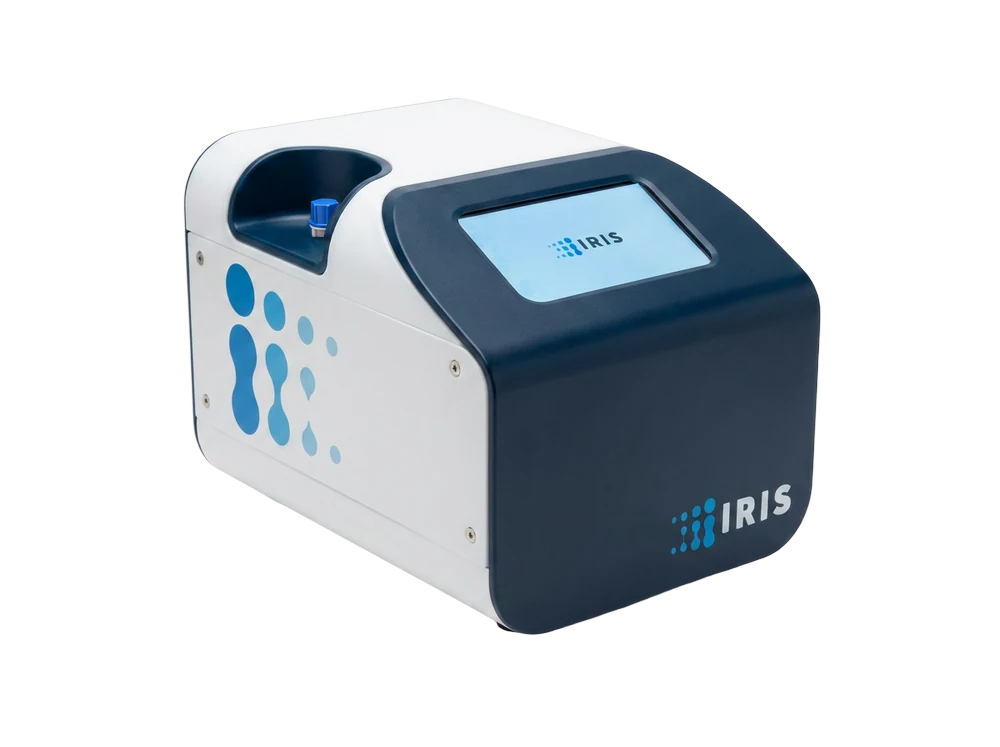
In development. Coming 2027. Not available for sale.
The TX-100 is being built to put the IRIS chip inside a single-use, vacutainer-sized tube, read in minutes by a compact analyzer, right where care happens. It is designed to bring the multiplex, label-free kinetics of the MX platform to the clinic: a single drop of blood into a disposable tube cartridge, many biomarkers measured in real time, and the pattern translated into an actionable phenotype without a central lab or a long turnaround.
First application:
critical care
The first intended application is in critical care. The TX-100 is designed to read a patient’s biomarker pattern at the bedside, so clinicians can match treatment to biology in minutes rather than hours. The same platform is intended to extend to sepsis, cardiac and neurological panels. None of this has been cleared or approved by any regulator, and none of it is available for use on patients.
Read about the clinical programTX-100 design targets
Nothing in this table is a measured specification of a shipping product. These are design targets for a platform in development.
| Design target | Value |
|---|---|
| Time to actionable result | approx. 10 min |
| Sample volume | 25 µL, a single drop of blood |
| Multiplexing | Up to 100 biomarkers per test |
| Measurement | Real-time kinetic and endpoint |
| Dynamic range | over 4 logs |
| Cartridge | Single-use, vacutainer-sized tube, with the IRIS chip inside |
| Sample type | Plasma initially |
| First intended application | Critical care, extending to sepsis, cardiac and neurological panels |
| Availability | 2027, targeted |
| Regulatory status | Not cleared or approved by the FDA. Not available for sale. |
The IRIS TX-100 is in development. It is not yet available for sale.
Every specification,
side by side
The whole line in one table, for the comparison you are actually running.
| Specification | MX-104 | MX-200 | TX-100 |
|---|---|---|---|
| Status | Shipping | Successor to the MX-104, coming Q1 2027 | In development |
| Regulatory | Research use only | Research use only | Not yet for sale, built for diagnostic use |
| Reader | Research labs buying this cycle | Research labs and assay developers | Hospitals and clinical partners |
| Format | Benchtop | Benchtop | Compact analyzer, point of care |
| Multiplexing | Multiplexed. Per-run count not published. | Up to 100 per run | Up to 100 per test |
| Measurement | Real-time parallel binding curves | kon, koff, KD and quantitation. | Real-time kinetic and endpoint |
| Reference channel | Not used | None required | None required |
| Bulk effect | Minimal | None | None |
| Sample volume | 100 µL to 2.5 mL per load | On request | 25 µL |
| Chamber volume | 2 to 10 µL | On request | Sealed cartridge |
| Flow rate | 6.25 µL/min to 5 mL/min | On request | Integrated, preloaded |
| Fluidics | 3 channels, flexible configuration | Integrated on-board buffers and automation | Integrated cartridge |
| Run time | up to 400 min per cycle | On request | approx. 10 min |
| Dimensions | 20 × 12 × 9 in | On request | In development |
| Weight | 30 lb | On request | In development |
| Power | 120 to 240 V, 70 W | On request | In development |
| Control | Onboard computer, keyboard and mouse included. Plug and play. | On-instrument software and touchscreen | Embedded software, same algorithms |
| Consumable | IRIS Chip | IRIS Chip | Single-use tube cartridge |
| Distribution | axiVEND | axiVEND | Not applicable |
IRIS Chip specifications are in their own table under IRIS Chips, because a consumable and an instrument do not share rows.
The full specification sheet for each instrument is under How to buy, and the publication record behind the sensor itself is on Evidence: 75 publications, cited 3,472 times.
How to buy
One distributor, one quote request, one instrument that arrives ready to run.
IRIS systems and chips are sold through axiVEND. Quotes, demonstrations, the MX-104 transition program and spotting equipment all route through the same conversation, so ask for whichever of them you need.
axiVEND
833-AXI-VEND
sales@axivend.com
350 E Crown Point Rd, Ste 1020, Winter Garden, FL 34787
Regulatory status
IRIS MX-series instruments and IRIS Chips are for research use only and are not for use in diagnostic procedures. The IRIS TX-100 is in development, is not available for sale, and is not for use in diagnostic procedures. No IRIS product has been cleared or approved by the FDA.